Hiển thị các bài đăng có nhãn East Nusa Tenggara. Hiển thị tất cả bài đăng

Thứ Năm, 29 tháng 12, 2016

Visit Hidden Paradise in Gili Lawa, East Nusa Tenggara.


Gili Lawa, also known as Gili Laba, is a stopover spot on the boat trip to Komodo National Park from Labuhan Bajo, East Nusa Tenggara.  It is on the north of Komodo Island. In fact, there are two islands of Gili Lawa: Gili Lawa Darat and Gili Lawa Laut. Gili Lawa Darat lies in between Gili Lawa Laut and Komodo Island. 

To get to the Gili Lawa, you can use the services of travel agents in Labuan Bajo selling a variety of travel packages of Komodo sailing trip, or liveaboard trip, with varied prices. As the Port of Gili Lawa Labuan Bajo is quite far ro reach within 1 day commuting, almost all travel agents arrange the destination to Gili Lawa into three days and two nights package (3D2N). Gili Lawa is too beautiful to visit without overnight stay, therefore the travel packages sailing 3 days 2 nights is the best arrangement so you can enjoy the sunrise and sunset there.

Gili Lawa, in fact Gili Lawa Darat, offers the best spot for watching sun sets and rises. The  landsape in Gili Lawa is dominated by hills filled with exotic expanse of grassland, which is yellowish when the dry season, and fresh green when entering the transitional season and the rainy season.

Trekking is the main activity you should do when visiting Gili Lawa. As the beauty of Gili Lawa will be complete when seen from the hill top. To get the best view, You need to climb up the hill. Depending on your time, You can either take a steep trekking route but faster or an easy ones but longer time.  


Trekking time it takes to get to the peak of about half to one hour duration depending on the stamina of each person is different.Any how, either route, the view you will get on the hill top worth the efforts What a magical view on the top. It is so breathtaking as you will find it.


Thứ Tư, 28 tháng 12, 2016

Visit Tourist Destinations in East Nusa Tenggara : Padar Island


Padar Island is the third largest island in the Komodo National Park, after the Komodo, and Rinca. Padar Island is  not as famous as Komodo or Rinca, but its beauty is not less than these islands. The Location of Padar Island is closer to Rinca Island compared to Komodo Island and is separated by Selat Lintah.


As part of the Komodo National Park, Padar Island is also a UNESCO World Heritage Site, along with the island of Komodo, Rinca and Gili Mota. Althought in the Komodo National Park, the Komodo dragon is no where can be found here.Around the island, there are also three or four small islands  each with a unique panoramic view. In Padar Island, you will find pink beach that is suitable for swimming, snorkeling, or just strolling along the beach.


Visitors can also climb the hill on the island of Padar to enjoy the panoramic view from the top. Blue sea and surrounding islands will hypnotize visitors.  


Although trekking towards the highest hill will be very tiring, but visitors will be presented with a panorama of rolling hills and scenery was gorgeous and capturing the moments would not be boring activities during a trekking trip.


If you are planning to visit the Komodo National Park, try to stop for a moment on this island, tranquility and its beauty will make you linger on this island.

Thứ Ba, 27 tháng 12, 2016

Komodo National Park, East Nusa Tenggara.


Komodo National Park is a national park located in Nusa Tenggara Timur, or the East Nusa Tenggara Province. Geographically, the national park lies between Flores Island of the East Nusa Tenggara Province and Sumbawa Island of  the West Nusa Tenggara Province composing of three major islands- Rinca, Komodo, and Padar Islands - and other smaller islands. 

The national park was established in 1981 and was designated as Man and Biosphere Reserve in 1977 by UNESCO. Komodo National Park demonstrated exceptional natural beauty and hold the large majority of the only areas in the World in which wild population of Komodo dragon lizard still exist. Based on these values, the UNESCO designated the park as a World Heritage Site in 1991. In 2009, the park became one of the Official Finalist of New Wonders of Nature.

Komodo National Parks covers 1,733 square kilometers of rugged hillsides and dry vegetation that highly contrasts with sandy beaches and the blue coral-rich waters.

There are more than 250 plants mixed of Asian and Australian species in this park, some of these grasses and trees are fire adapted. The inhabitants  this park comprises also more than 30 mammals, 130 birds, 40 herpetofaunas, 100 fishes, 380 corals and numerous other invertebrate animals.

Most people living in and around Komodo National Parks are mostly fishermen which depend on the park's waters. There are three villages in the park : Komodo village in Komodo Island, Pasir Panjang village in Rinca Island, and Papagaran village on Papagaran Island with a population of more than 4000 people.

The Main Attraction : Komodo Dragons
Komodo Dragon (Varanus komodoensis) could only be found in the islands of Komodo, Rinca, Gili Motang, and Nusa Kode in KOmodo National Park. A small population of the dragons could also be found in western and northern Flores.

Komodo Dragons are carnivorous, cannibal, scavenger, and top predator. The main prey of the Dragons is imor deer. They also feed on water buffaloes, wild boars, wild horses, and long tailed macaques. The juvenile dragons feed on small lizards, rats, insects, and other small animals.  The mating season of the dragon occurs in around July - August, about two months later the female dragons will lay the eggs. Around February - April, the juvenille dragons hatch.

The Gateways 
There are two gateways into the Komodo National Park: Loh Liang and Loh Buaya. Loh Liang is the gateway in Komodo Island, providing visitors with the following activities : Komodo dragons and other wildlife watching such as Timor deer, wild boars, and water buffaloes; Bird watchingsuch as Sulphur crested cockatoo (cacatua sulphurea), orange-footed scrub fowl (Megapodius reinwardt), Sprangled drongo (Dicrurus densus), Green imperial pigeon (Ducula aenea), and Friarbird (Philemon buceroides).

Loh Liang is only two kilometers from Komodo village by sea and land transportation. Access into Loh Liang can be by sea and land. With motor vehicles, it takes approximately 10 minutes whereas by sea speedboat less than 5 minutes.

There are four types of trekking to choose, namely short track, medium track, long track, and adventure track. It depends on how long you want to see the dragons.Short track is reserved for tourists with a limited time. Tourists can take a short walk of around one kilometer  from Loh Liang to Tamaridn woods  and takes  a half-hour.
A medium trek takes you the route from Long Liang to Sulphurea Hill. The medium trek will walk you through dry forest and see water holes with Timorese deer wandering around. Once on the top of the hill,  the surrounding view of Komodo Island is worth the effort of climbing it.For tourists who love trekking, then the long and adventure trek is the right choice. Long Trekking takes you from Loh Liang to Banu Nggulung, while adventure trekking it takes you either from Loh Liang to Mount Ara or from Loh Liang to Loh Sebita via Rudolf Hill. By choosing this path of up to eight kilometer of walk then it is likely to see the cold-blooded animals in the wild roaming

Hikers on the island have to be accompanied by rangers armed with a long stick to protect from potential attacks of Komodo dragons. To get into the area of dragons breeding, you have to spend Rp 50 thousands, once entered, any kind of tracks you select, and Rp 80 thousands to pay for ranger services. Especially, for adventure, prepare a fund of Rp 500 thousands per 15 minutes to one ranger. 
 
The other gateway is Loh Buaya on Rinca Island. Loh Buaya provides visitors with the opportunity to the following activities :Komodo dragon and other wildlife watching such as water buffalo, long-tailed macaque, Timor deer, wild boar, and wild horse. 

Likewise, in Loh Buaya there are four types of trekking to choose, namely short track, medium track, long track, and adventure track.Short trekking takes you from Loah Buaya to Kepala Kuda, Medium from Loh Buaya to Panorama Hill, and the long one from Loh Buaya to Wae Waso. Adventure trekking gives you three alternatives  from Loh Buaya to : Golo Kode, Lengko Nggunung, and Kerrora village. It all depends on the time you have in Rinca Island.

Source: www.komodo-park.com

Thứ Hai, 28 tháng 11, 2016

Visit Labuhan Bajo, East Nusa Tenggara : A "Must" Tourism Destination.

Welcome to Labuhan Bajo.
If you happened to meet Indonesians and asked about Labuan Bajo, the responses were surely " Sorry never heard of the name of that city in Indonesia". It sounds reasonable  to  most layperson in Indonesia may be seldom heard of the town of Labuan Bajo since it is only a fishing town on the western tip of Flores in the East Nusa Tenggara,Eastern Indonesia.

Even, probably a lot of tourists, both domestic and international, who have only known tourist destinations in Bali and neighboring provinces those in Jawa Island, as well as West Nusa Tenggara  have, actually, overlooked many other potential sites in the country with much more rewarding visits, of course, with value-for-money attractions, such as those in Labuhan Bajo.
Labuhan Bajo, the busiest tourist Center in Flores.
Since Komodo Island was designated as "Komodo Island is the New 7 Wonders of the World", aside from being a small fishing town, Labuan Bajo today has become one of the busiest tourist centers in Flores. This town has become a stopover point for those who want to travel to the island of Komodo, a tourist destination of  watching a unique creature called Komodo Dragon in the Komodo National Park.
In fact, the Government have decided Labuhan Bajo among the ten prime destinations to be prioritized for the acceleration of tourism development in Indonesia. Other prime destinations including  Borobudur Ancient Temple, Central Java; Mandalika Beach, West Nusa Tenggara; Labuan Bajo, East Nusa Tenggara; Bromo-Tengger-Semeru Mounts, East Java; Thousand Islands, Jakarta; Toba Lake, North Sumatra; Wakatobi, Southeast Sulawesi; Tanjung Lesung Beach, Banten; Morotai Island, North Maluku; and Tanjung Kelayang Beach, Belitung (The Jakarta Post, September 6 2016).
 
Administratively,  Labuan Bajo is a village of nine villages located in the district of Komodo, West Manggarai regency, East Nusa Tenggara province, Indonesia. Now it has been developed into a city of Labuan Bajo.Its territory covers; Kampung Ujung, Kampung Tengah, Kampung Air, Lamtoro, Wae Kelambu, Wae Medu, Cowang Dereng, Wae Kesambi, Wae Bo, Lancang, Sernaru, Wae Mata, Pasar Baru, Pede, dan Gorontalo.


Chủ Nhật, 27 tháng 11, 2016

Liveaboard Leisure Trip in Indonesia: Komodo Island Tour, East Nusa Tenggara.


Adventure into the Komodo Island National Park was my long time dream. My passionate for the trip came over as the Komodo Island was designated as the New Seven Wonders of the World, my activity in the public sector occupied most my time. But this time, I had a full support from my boss. Wasn't it  a big luck for me. Since the attractions I was looking for spread over a number of islands which required me to hop from one island to another, then liveaboard leisure trip would suit me best.

It took me a while to browse the Internet searching for a tourist package by local tour operators to Komodo Island offering the one I needed. at the end of the day, I had booked a stay at 'Bajo View Hotel'  and  a liveaboard trip of 3D2N from November 10 to 12, 2016  or three days on the go and two overnight stay with the following itinerary:

Day 1: Labuhan Bajo - Kanawa Island - Sembilan Island - Overnight at Gili Lawa (Sun Set);

Day 2: Gili Lawa (Sun Rise) - Manta Point - Pink Beach - Komodo Village (overnight);

Day 3: Padar Island - Rinca Island - Pulau Kelor - Labuhan Bajo.

Provided during liveaboard including: full AC along the trip, pick up and drop at hotel and harbour, foods and drinks, life jackets, snorkeling gear, tour guide and ranger in the Komodo National Park, entry tickets into all destinations, as well as documentation with drone, a Quadcopter.

I decided to get to Labuhan Bajo by hopping over two big citries : Jakarta and Denpasar, out of missing it so much for such a quite long time  beside ample time I had. Actually, I could have flied directly by Garuda Air Ways, our national flag carrier , which just opened six times a week to Labuhan Bajo. After making preparation for the trip, I departed from Jakarta on November 9th, at 8.20 WIB with Lion Air then landed on time in Denpasar. After stopover for around four hours, I flied again to Labuhan Bajo at 14.00 WITA and landed on time.

Arriving on the airport, with a bit of confusion on how to go to my hostel, I then grabbed a taxi with flat rate Rp 60,000.0. Around five minutes, the taxi dropped  me ' Bajo View Hostel'. The hostel was not quite good and costed me only Rp 110,000.0. I reckoned it as budget one, particularly when discounted with a harbour view.

Still having time before the ' real show time', I chose to take a walk to the harbour for photography hunting and sunset in the evening. In the night, I spent it having fun in a cafe called 'Le Pirate'. It was already full with foreign visitors, all of them  tourists I supposed.

The next day, on November 10th, I spent my first day in Labuhan Bajo to explore the nearby attractions. After eliciting some information from a hostel staff, I chose to go to Cunca Wulang water fall. I got out the hostel at around 10.00 WITA and took me almost one hour with a hired motor cycle to the entry post of  the destination area. The ride was not a easy one as it was  an ascending and winding small road with bushes on the left and right. I needed to pay an entry ticked of Rp 70,000.0 including a local guide, Mr. Zakarya.

After trekking for nearly thirty minutes, we arrived at Cuncawulang waterfall. There were already eight foreign tourists, most of them are western visitors. It was quite interesting attraction of a lake with two colors, green during dry season and blue  wet season. you can do cliff jumping and swimming in a cool water. You would see the natural harmony over there with local people empowered as the forest custodian. Notably, all contributions into the area go to the local people. Black cloud on the sky gave me a sign to go back to the hostel.Thank you Mr. Zakarya for guiding you are such a humble men.

I had no idea with who and how many I was going to share the trip with. Thursday the11th, I was pick up on 09.30 WIT (East Indonesia Time) at the Bajo View Hostel and dropped at Kampung Ujung and rounded up at the port. Until, I realized that I was going to  share the joy with six teen others and all were young country folks eight young men and eight young women from a number of cities in Sumatra and Java. Nearly all of them seemed to me a kind of easy going and easy to mingle with.

We then departed for Kanawa Island, a fifty minute sailing. The Island offers a wonderful nature where you will find its crystal clear water and a beach with white and soft sand. Visitors were mostly snorkeling here.

we had our lunch on the boat while sailing to Pulau Sembilan or Nine Island. its actually an atoll reef  with a shape of nine. that's why it is called Pulau Sembilan. In this island, we swim and touched jelly fish. Don't you worry touching jelly fish is not hurting since its sting is so small.

Having fun in Pulau Sembilan, we set off to Gili Laba.  It took us around three hours depending on the sea current and the weather. Luckily, it was a good weather when we were ashore. Then, the Tour Leader took us trekking to the hill on the left to find the best spot for watching  sunset.

Before twilight we had to be on board again, we went down the hill with care as the way down was slippery and steep.  We stayed overnight here.

we all woke up very early in the morning at 04.00 WITA by the tour staff to start another trekking for the sun rise. The trekking line was quite challenging and not easy for some guys but the attraction was worth it. After around twenty minutes of an ascending route, we finally got to the peak with the Sun still behind the cloud.

A couple of minute later, we marveled at the appearance of yellow lights from the Sun appeared.Our next destination was Manta Point. In this spot, we swim and  gazed at a cluster of manta looking for food. Remember, do not touch it because the tail is very dangerous.


From Manta Point, we then, continued our trip to Pink Beach. It really is a stunning beach with pink fine sand which attract so many tourists to come enjoy its uniqueness.


you can do many things here including sun bathing, walking along the beach, photo taking, snorkeling, and trekking. when trekking choose the route to the highest spot because you could see the whole terrain of Pink Beach, as well as Komodo Island.

Komodo Island was our main destination with Loh Liang as the entry gate. In local language, Loh means egg, and Liang hole; all together becomes egg hole. Actually, there are three entry gates into the Komodo Island National Park depending the length of trekking route: short, medium, and long. we chose the short one, any how we still saw a herd of deers and six Komodo Dragons.

Before started trekking the ranger gave us some dons along the route: do not make noise, do not make a surprising move,  do not swing beg, or scarf as it looks like foods to them, women with menstruation expected to report as they could smell it and like it, and lastly do not litter along the way. Once finished, we got back to the boat and head off to the water of Kalong Island and stayed overnight there.

On the last day of our liveaboard trip, we head off to Pulau Padar very early at 04.00 WIT.  Pulau Padar is also the icon of this trip for its breath taking view. We arrived at a temporary jetty there around 06.00 WIT. The trekking route to the hill in Pulau Padar is less challenging as the way up is not so steep. It took only twenty minutes to the hill top.

Indeed, the view of three beaches that make  up  a half of circle is really stunning. I was speechless at the first time gazing over the dazzling view in Pulau Padar. Sailing back to Labuhan Bajo, We made a stop at Pulau Kelor and enjoyed the beauty of its beach and small hill. Trekking in this island was more entertaining than playing in the beach.

We arrived at the habour of Labuhan Bajo at 12.00 WIT and drove to the airport afterward. Before departing for Denpasar, I brought home some souvenirs sold in a souvenir shop, just across just the airport. Don't forget to bring cash

I guested it was a perfect trip for me, a value for money trip. I could enjoy quite a variety of attraction along the trip; enjoy the beauty of  mother nature on the beach and islands besides I could do many things like watching sunset and sunrise, sunbathing, trekking, swimming, snorkeling,gazing Komodo Dragon, touching jelly fish, and watching manta. Indonesia is,indeed, a wonderful country with friendly local people where ever you go.


Note:  This blog thanks a great deal to Mr. Robby for sharing his experience. 

Thứ Bảy, 20 tháng 8, 2016

"Kain Tenun Ikat Flores": A Cultural Wealth From East Indonesia.

Kain Tenun Ikat Flores.
Kain Tenun Ikat Flores is woven fabrics  traditionally made in Flores but high artistic value and wonderful. Kain Tenun Ikat Flores is not only a reflection of the beauty but the mix of colors and patterns represents the natural charm of Flores. That is the philosophy underlying the journey of human life in flower island. This is the beauty that made Portuguese called "Copa de Flores" to Flores, the area covered with the mountains and beach at the same time presenting a nature dyed with various types of flowers. The Portuguese arrived in Flores to seek spices as well spread the religion in this region rich in cloves, nutmeg, pepper, and hazelnut.

The process of making the product a distinctive cultural heritage of the island in the eastern part of Indonesia have passed a number of time-consuming process for months. It takes persistence and patience to produce a piece of woven cloth in which almost all of the connective fabric-making process is done traditionally and manually and requires perseverance and patience.

There are at least over 20 stages and take for nearly a month so that a woven fabric Flores can pamper the eyes and appreciated demand purchase and sale transactions. The process of making Kain Tenun typical Flores begins by separating cotton from seed, cotton spinning it into yarn, dyeing process, binding motif, and the last just started weaving. No special equipment is used to separate the cotton from the seeds included for the thread that has been woven. 

In yarn dyeing, weaving traditional craftsmen still use traditional dyes obtained from nature. For example, by using several types of plants, such as leaves and roots of noni (red), leaf sap (blue), wood Hepang, turmeric (yellow), greedy, bark of mango trees, bark brown, dust mahogany indigo, zopha , pecans, and much more. Staining can be done repeatedly to produce a distinctive color. There are at least 11 colors are created from natural materials that are environmentally friendly. The color of natural materials and thread of cotton makes the color is not bright modern thread but it is more durable and reveals the colors more and more beautiful.

Some areas in Flores is a woven cloth production centers, among which are Maumere, Ende, Manggarai, Ngada, Nage Keo, Lio, and Lembata in the eastern part of Flores. Each region or ethnicity has a variety of motifs, patterns and preferences of different colors in making ikat. Such diversity is a form of manifestation of symbols that represent the ethnic, indigenous, religious, and other things of everyday people Flores.

The weaving cloth typical of the Sikka region, for example, are usually always use dark colors such as black, brown, blue, and blue-black. For motive, there is some kind of distinctive, namely the motive okukirei is based on the story of sub-ethnic ancestors formerly Sikka is an accomplished sailor. Figure fisherman, boat, shrimp, or crabs become characteristic of the fabric of this type of motif. There is also a kind of motif mawarani is decorated with a pattern of roses. That said, this motif is typical motifs specific to the daughters of the Kingdom Sikka. This motif has now become the favorite of women.


Thứ Ba, 1 tháng 12, 2015

Birding in Indonesia : East Nusa Tenggara


Throught out East Nusa Tenggara, there are more than 70 types of endemic birds. Here is a list of endemic areas recorded by "Burung Indonesia", a NGO on bird conservation in Indonesia along with a list of birds from www.wingsbird :
  • Camplong : Marigold lorikeet, Timor Bus-chat (Decu Timor), Plain Gerygone (Remetuk Timor), Black-breasted Myzomela, Timor Leaf-Warbler (Cikrak Timor), Northern Fan-tail, Buff-banded Bushbird (Celucuk Timor), Streaked (Timor) Boobook;
  • Dataran Bena;
  • Bipolo: Yello-crested Cockatoo, Timor Blue-Flycatcher (Sikatan Bakung), Timor Stubtail (Buntut Tumpul Timor, Slaty-Cuckoo-Dove (Merpati Hitam Timot), Fawn-breasted Whistler (Kancilan Timor), Red-chested Flowerpecker (Cabai Lombok), Ashy-bellied White-eye;
  • Bu'at;
  • Gunung Mutis: Pink-headed Imperial Pigeon, Olive headed Lorikeet (Perkici Timor), Iris Lorikeet, Tricolored Parrotfinch, Pygmy Wren-Babbler, Red Jungglefowl, Oriental Pipit, Black-faced Cuckoo-shrike, Snowy-browed flycatcher, Pied Bushchat ;
  • Gunung Timau;
  • Kateri;
  • Oelnasi : Timor Black Pigeon, Bar-necked Cuckoo-Dove, Black-banded Flycatcher (Sikatan Timor), Timor Sparrow, Black-banded Fruit-dove, Timor Bushchat (Decu Timor) ;
  • Semau;
  • Teluk Kupang.
Source: NTT Hidden Paradise : Kupang, Soe, Rote, Alor by Rita harahap

Thứ Năm, 24 tháng 11, 2011

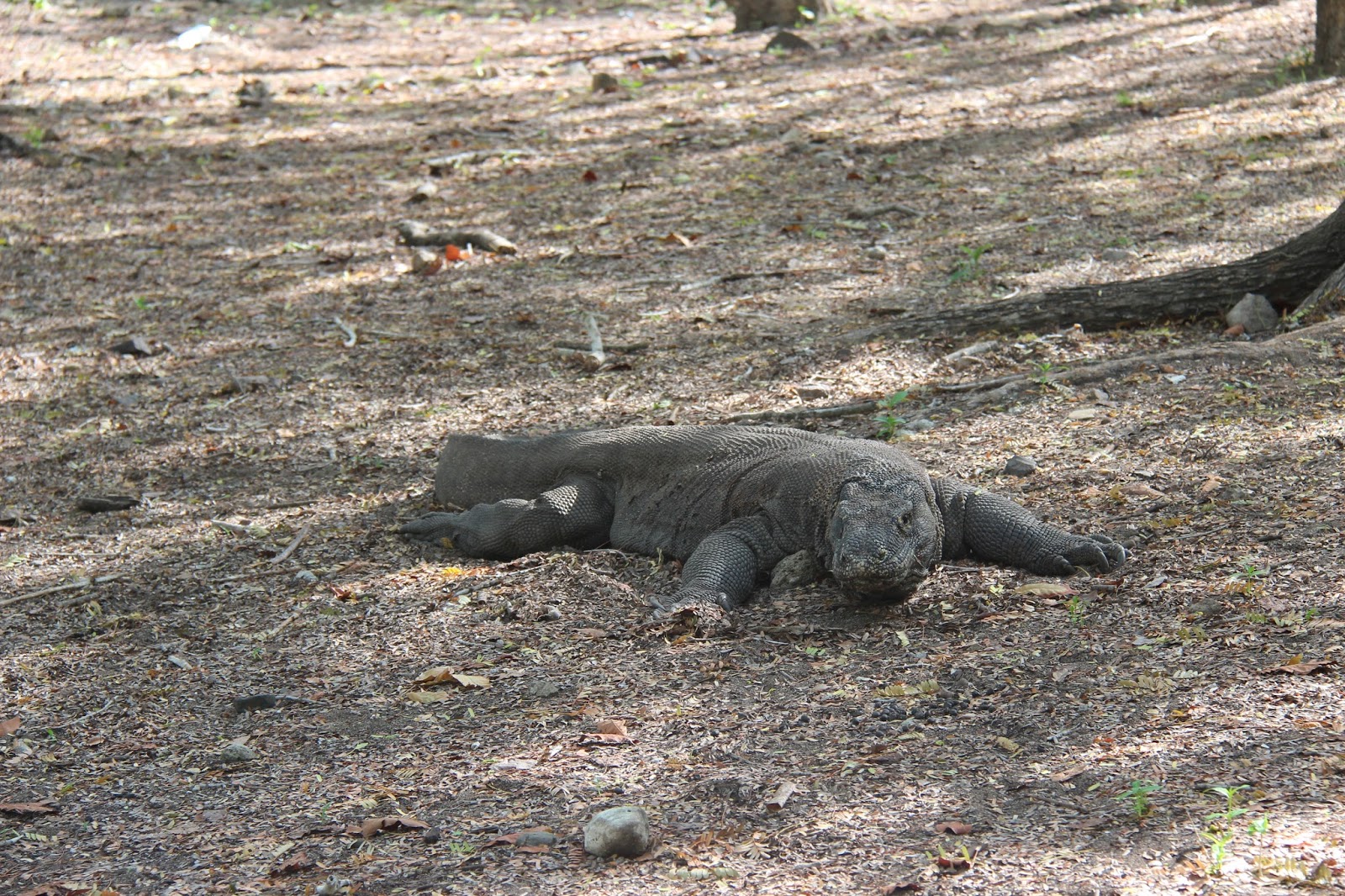
Komodo Dragon

Real dragons spurt no fire, have no need to fly and cast no magic spells. And still, one look from them might render you speechless. These komodos, the real life dragons, are a sight indeed. Gigantic, the lizard-like creatures are about two or three meters in length. They can easily weigh about 165 kilograms. Despite of their sheer size and appearance, they are not active hunters. What makes them intimidating is the fact that they are a patient predator. In the wild, they stalk a victim, usually a weak or injured one. One bite and that's what it usually takes. After following the victim for a while, sometimes up to several days' time, the komodos will devour the dying prey.

The Komodo Dragon (Varanus komodoensis) is an endangered species which can only be found in the Komodo National Park (KNP) in East Nusa Tenggara (NTT). Because of the unique and rare nature of this animal, KNP was declared a World Heritage Site by UNESCO in 1986.


The park includes three major islands, Komodo, Rinca and Padar, and numerous smaller islands together totaling 603 km2 of land. The total size of Komodo National Park is presently 1,817 km2. Proposed extensions of 25 km2 of land (Banta Island) and 479 km2 of marine waters would bring the total surface area up to 2,321 km2.At least 2500 Komodos live in this area. Large dragons are usually three meters long and weigh up to 90 kg. Their habitat has beautiful panoramic views of savannas, rain forests, white beaches, beautiful corals, and clean blue seas. In this area, you can also find horses, wild buffalo, deer, wild boar, snakes, monkeys, and various types of birds.

KNP has a rich and amazing underwater sea biotica. Divers claim that Komodo waters are one of the best diving sites in the world. It has fascinating underwater scenery. You can find 385 species of beautiful corals, mangrove forests, and seaweeds as a home for thousands of fish species, 70 types of sponges, 10 types of dolphins, 6 types of whales, green turtles and various types of sharks and stingrays.

Or you can do some diving activities in Komodo Island. Go this link if you want to see more information about it.

Thứ Tư, 26 tháng 1, 2011

Kelimutu: The Tricolored Lakes

Kelimutu Lake on Mount Kelimutu, Ende, Flores has three smaller lakes located next to it. The lakes appear to have different colors that change over time due to volcanic activity which started million years ago. In the entire world, this color changing phenomenon only occurs at Kelimutu.


Presently, these three lakes have black-green color in the far east lake, green in the middle lake, and black in the west lake. Previously, the far east lake was red and the middle lake was blue.

The local community considers these lakes a sacred place, where the souls of the dead lie. The name Kelimutu itself was derived from the word ‘keli’, means ‘mountain’, and ‘mutu’, means ‘boil’. The East lake is also called “tiwu ata polo” or lake for evil spirits, while the middle one is called “tiwu nua muri koo fai” or lake for young souls, and the west lake is called “tiwu ata mbupu” or lake for elderly and wise peoples souls. Lake Kelimutu and its spectacular panorama are now a very popular tourist attraction.


Getting There
Kelimutu is situated in Koanara village, Wolowaru sub-district, Ende Regency, about 66 kilometers from Ende city and 83 kilometer from Maumere City. Moni is a village at the foot of Mount Kelimutu. It is the gate to Lake Kelimutu. The distance between Moni and Kelimutu is 15 kilometers.

You can take a motor taxi, car or public transportation to take you to a parking lot before Kelimutu peak. Buses plying the Ende-Maumere route will pass Moni. From there, you must walk 30 minutes along the mountain side.

Every day, there are flights from Denpasar and Kupang to Maumere. To Ende, daily flights only come from Kupang. If you are interested in making a long trip in Flores, you can start from Maumere in the west and visit Kelimutu, Ende, Bajawa, Ruteng and lastly Labuan Bajo (Komodo) or vice versa if starting from the east.


Getting Around
Kelimutu area is surrounded with forest containing floras that are scarcely found in Flores area. Other than pines, there are also casuarinas, red wood and edelweiss. Pine forest grows well in this side of Kelimutu Mountain. The other side of the mountain is dried land with highly unstable sand and soil. Local community believes that Kelimutu Mountain is sacred and donates fertility to the nature nearby.

Visitors can only walk around Lake Kelimutu but not all areas can be explored because some are dangerous and therefore restricted. From Moni to Kelimutu, if you like to go trekking, there is a path which is shorter than the car access route.

Distance from Moni to the top is about 12 kilometer (km). The distance to the parking lot by motor vehicle is 11 kilometer, and then visitors will climb on foot through the pathway for 30 minutes. 


To Do
Morning is the best time to witness the beauty of Kelimutu Lake. Close to the midday and at evening the scenery of Kelimutu Lake is blocked with thick mist.

Other than the scenery of Kelimutu Lake, visitors can enjoy Flores’s hilly topography from the peak of Mount Kelimutu, during a sunny day. Or the beauty panorama at Kelimutu National Park. There’s the Conservation, containing pines and casuarinas trees which are sights for sore eyes.

Tired of hearing car horns? Listen to the chirp of birds inhabiting Kelimutu National Park. Or feed the many long-tail monkeys in the forest to the south.

Kelimutu area’s also adorned with cultural wealth like traditional houses, traditional dances and woven clothes of Flores. In addition, there are hot water sources, waterfall, and tradition settlements that you can visit along the way.

The best time to visit is July to September. But if you missed that period, you can witness a local tradition in mid-October when the community offers livestocks for paa loka (religious offerings).

Bài đăng phổ biến